Column · @privategauditourbarcelonalab
How to Choose the Right Private Gaudí Tour in Barcelona
Choosing a private Gaudí tour in Barcelona is less about picking the most famous buildings and more about matching the visit to your pace, interests and schedule. Gaudí's work is spread across the city, and each site rewards a different kind of attention. Some visitors want the drama of Sagrada Familia, others want the colour and detail of Casa Batlló, while many want a route that connects several landmarks without feeling rushed.
The right choice depends on a few practical decisions made in the correct order. Start with what you want to understand, then shape the route, check access, compare guiding styles and finally look at the smaller logistics that affect the day. A clear plan makes the visit smoother and helps you avoid paying for features that do not matter to you.
Decide what you want from the visit
Begin by defining the purpose of the tour. A private visit works best when it has a clear focus. If architecture is the main interest, the route can give more time to structure, geometry, light and decorative detail. If the visit is for a first trip to the city, a broader route may be better, with Gaudí's work placed alongside the surroundings that shaped it.
Think about the people joining. Children may need shorter stretches, clear stories and fewer dense explanations. Design lovers may prefer time at La Pedrera, where the façade, interior spaces and rooftop show different sides of the architect's imagination. A couple looking for a calm visit may value quieter timings and a slower pace more than a long list of stops.
Watch for tours that promise too much in a short span. Gaudí sites are detailed, and moving between them takes time. A route that includes several major buildings with little time at each one can feel like a race. A good private tour should leave room to stand back, look up and ask questions.
Choose the buildings that fit your interests
Once the purpose is clear, choose the core sites. Sagrada Familia is often the anchor because it is complex, visually striking and tied to Gaudí's later work. It also has security checks and timed entry, so the visit needs careful planning. A private gaudi tour barcelona that includes this basilica should make clear how entry is handled and how much time is set aside inside.
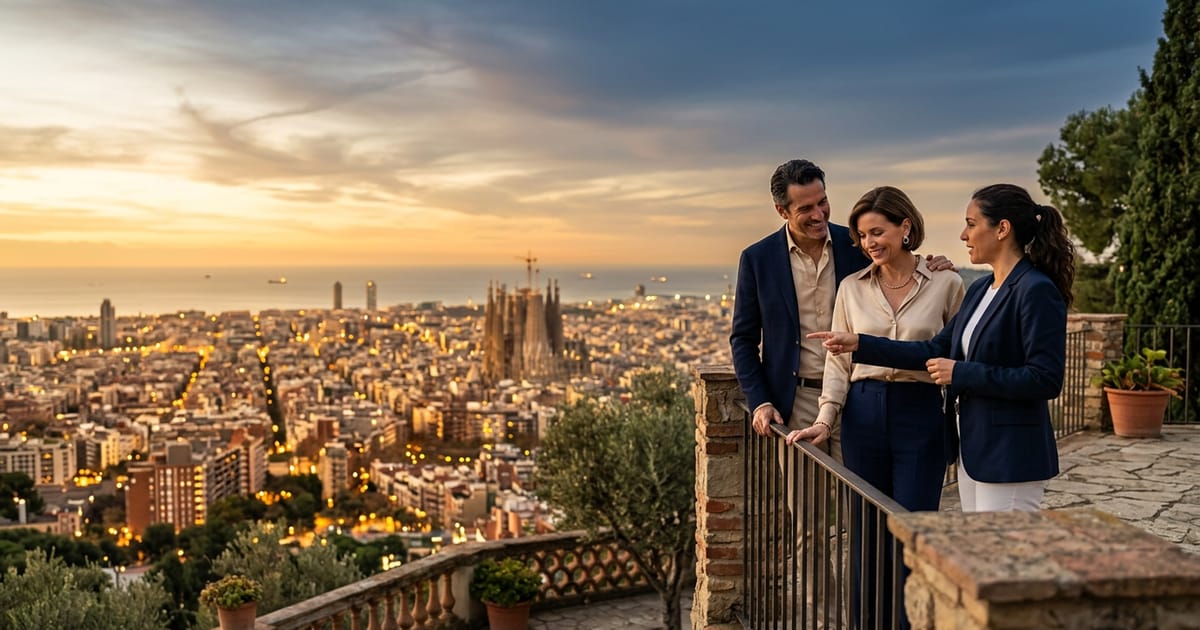
Park Güell offers a different experience. It is more open, more social and more dependent on the route through the park. The best visit gives context to the mosaics, the sloping structures and the views over the city, rather than treating the park as a quick photo stop. If the group includes people who dislike steep paths, ask about the walking route before booking.
Casa Batlló and La Pedrera suit visitors who enjoy close architectural details. These stops reward explanations of façades, staircases, light wells, furniture and rooftop forms. They are also easier to fit into a city route because they sit in a well connected area. If only one of these is included, compare what each offers. Casa Batlló is vivid and symbolic, while La Pedrera gives a broader view of Gaudí's design language and spatial ideas.
Some routes include the Gothic Quarter to set the older city beside Gaudí's modern forms. This can work well, but it should serve a purpose. The old streets add context only if the commentary connects them to Barcelona's growth, taste and urban change. Otherwise, they simply take time away from the buildings.
Check how access is arranged
Access is one of the most important points to verify. Many popular Gaudí sites use timed tickets, controlled entry and security procedures. Skip-the-line access can be useful, but the term is often used loosely. Ask what it means in practice. Does it cover ticket purchase, entry queues, security checks or only part of the process? A clear explanation is more useful than a broad promise.
Entry rules also affect the order of the visit. A route may need to follow reserved times rather than the most natural walking path. That is not a problem if the plan is built around it. It becomes a problem when the schedule leaves no buffer for delays, bathroom breaks or a longer discussion at a favourite stop.
Check whether all entrance costs are included or handled separately. This is not about finding the lowest figure. It is about avoiding surprises and knowing what the tour covers. A well described itinerary should state which sites are entered, which are viewed from outside and where free time, if any, is built in.
Also look at accessibility. Some Gaudí sites include stairs, uneven surfaces, narrow spaces or controlled routes. If anyone in the group has limited mobility, ask specific questions rather than relying on general wording. The answer should cover entrances, lifts, seating, walking distances and whether the route can be adjusted.
Compare the guiding style
A private tour should feel different from a standard group visit. The main advantage is the chance to shape the commentary around the group. Some guides focus on historical facts and dates. Others explain design choices, social context, symbolism or the technical side of construction. Neither approach is automatically better. The right style is the one that keeps the group engaged.
Before choosing, consider how much structure is wanted. A highly organised tour gives a strong narrative and keeps the day moving. A looser visit leaves more space for questions and spontaneous discussion. Both can work, but they suit different travellers. If the group wants a relaxed conversation, look for language that mentions flexible pacing or tailored commentary.
Guided commentary should also be balanced. Gaudí's work can be explained in dense detail, yet too much information can flatten the experience. A good guide knows when to explain a feature and when to let the group take it in. Ask whether the commentary is continuous or whether there are pauses at key viewpoints and interiors.
Language matters too. Confirm the language of the tour and whether the guide can handle mixed levels of knowledge. A clear explanation for a general reader is often more enjoyable than a specialist lecture that assumes prior study.
Read the route as a real day
Next, read the itinerary as a sequence of real movements. Look at starting point, meeting arrangements, walking distances, transport between stops and the length of time at each site. A route that looks impressive on paper may be tiring if it crosses the city at a busy time. Barcelona's streets, queues and pedestrian traffic can shape the day as much as the buildings themselves.
Pay attention to the order. A logical route reduces backtracking and keeps energy levels steady. For example, pairing nearby stops makes more sense than jumping across districts and returning later. If a tour includes Sagrada Familia and Park Güell, the plan should account for the fact that both can involve significant time on site and movement between them.
Meal breaks and free time also deserve attention. A full day without a proper pause may feel heavy, especially in warm months. A half day may be enough for two major stops if the pace is focused. The aim is not to fit in everything. It is to choose a route that leaves each building with room to register.
Useful questions at this stage include:
- How long is spent inside each building?
- Where does the tour start and finish?
- Are transfers included, or is the route on foot and public transport?
- Can the order change if ticket times require it?
- What happens if the group wants to linger at one stop?
Set a sensible budget boundary
Price should be considered after the route and style are clear. Otherwise, comparison becomes difficult because tours may include very different things. One option may enter several interiors, another may focus on exterior viewing, and another may include transport or special access. Match the inclusions against what matters to the group.
A higher price is not always a sign of a better visit, and a lower price is not automatically poor value. Look for transparency. A clear description of what is included, what is excluded and how the schedule works is often a better signal than vague claims. If something is unclear, ask before committing.
Think about the value of time as well. A private tour that saves the group from confused transfers or poorly timed entry can feel more efficient, even if it covers fewer sites. On the other hand, a tightly packed premium route may not be worth it if the group prefers slow looking. The best value comes from fit, not from the longest list of stops.
Check the small details before booking
The final stage is to confirm the practical points that can affect the day. These details are easy to overlook when the buildings sound impressive, but they shape the experience. Confirm the meeting point, start time, duration, group size, language and cancellation terms. Make sure the name used for each site matches the place expected, as similar names and nearby entrances can cause confusion.
Ask what happens if a site changes an entry time or access condition. Popular attractions can adjust operations, and a good plan should be able to adapt. The answer does not need to be elaborate. It should simply show that the route has been considered beyond the ideal schedule.
Weather is another practical point. Barcelona can be bright and warm, and open stops such as Park Güell feel different under strong sun. Comfortable shoes, water and sun protection can make a long walking day easier. In cooler or wetter conditions, interiors become more attractive and outdoor pauses may be shorter.
Finally, decide whether the tour should be private from start to finish or only private for part of the visit. Some travellers value complete privacy and a fully shaped route. Others are comfortable joining a timed entry system while keeping their own guide. Understanding this distinction helps avoid disappointment, especially at major sites where shared entry areas are common.
A well chosen private Gaudí tour should feel coherent from the first stop to the last. It should match the group's interests, respect the building's complexity and leave enough space for genuine attention. When the route, access, commentary and logistics work together, the day feels less like a schedule and more like a clear introduction to one of Barcelona's most distinctive bodies of work.